
Planting the Seeds of Fertiliser Innovation
RELEASAFE starts with materials that industry and agriculture often leave behind. Through three phases of innovation, these resources are transformed into fertiliser prototypes, tested for their performance and brought closer to the fields where they can support healthier soils and more efficient crop growth.

From feedstocks to prototypes
PHASE 1: FABRICATION
RELEASAFE gives a second life to feedstock. Lignin from paper production, starch and wood residues from forestry are turned into functional building elements for the next generation of fertiliser coatings.

Lignin derivates
Recovered from black liquor, a by-product of the pulp and paper industry.
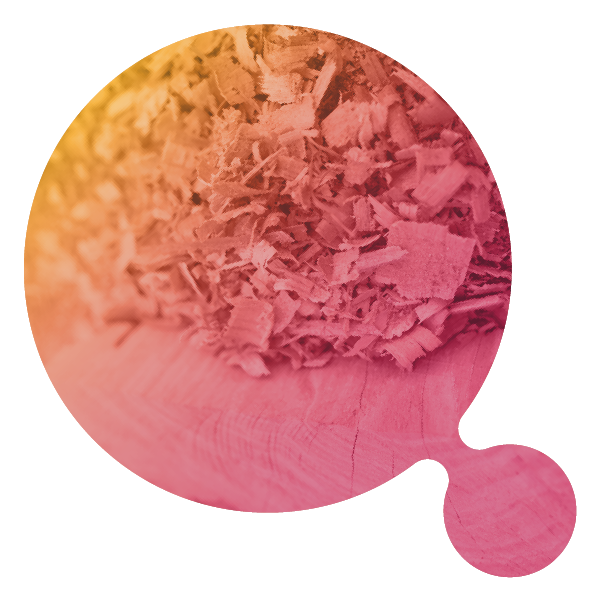
Wood materials
Produced from pruning and forestry residues.
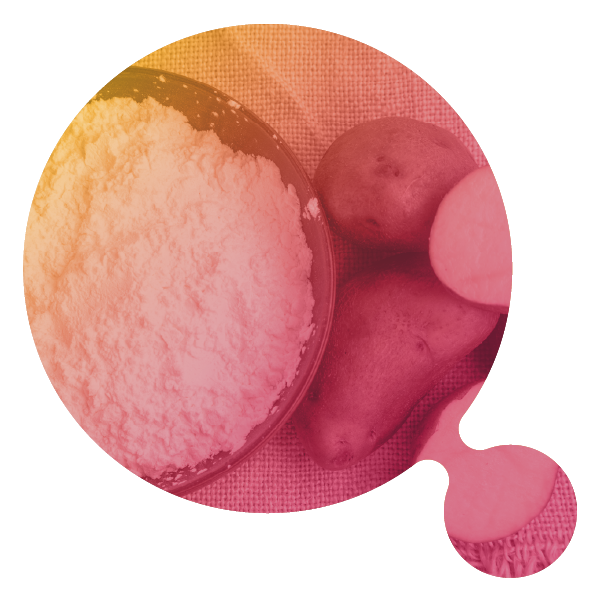
Reclaimed potato starch
Recovered from agri-food side streams.

Choosing the strongest candidates
PHASE 2 : DOWNSELECTION
Prototypes are then benchmarked using the following key criteria:

Nutrient-release profile

Compatibility with urea

Biodegradability

Safety

Sustainability

Economic viability
From the initial 10 prototypes, only up to 3 of the strongest ‘candidates’ move forward to the validation phase.
From prototypes to field-tested solutions
PHASE 3: VALIDATION
Before testing the top prototype candidates in greenhouses and fields, the project first scales up both their materials and their formulations.

GREENHOUSE VALIDATION
Once the formulations have been scaled up, they are tested under controlled greenhouse conditions.
- Nutrient-release behaviour
- Plant nutrient uptake
- Nitrogen-use efficiency
- Plant growth and biomass
- Soil compatibility
- Biodegradability

FIELD VALIDATION
Finally, a second test is performed under open-field conditions with maize and tomato.
- Nutrient-release behaviour
- Plant nutrient uptake
- Nitrogen-use efficiency
- Plant growth and biomass
- Soil compatibility
- Biodegradability
Beyond Fertilisers
Scaling RELEASAFE into seed-coating applications
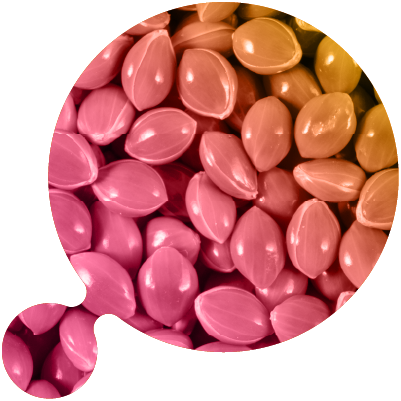
RELEASAFE also aims to investigate whether its source materials can be adapted for seed-coating applications, focusing on coating uniformity, germination, early plant development and nutrient uptake. Seed coating involves applying a thin layer of material to a seed before planting, and helps improve seed handling and serve as a carrier for nutrients or other substances that support germination and early growth.